

Projects
The types of technologies and projects that DOE invests in shape our understanding of its innovation priorities. This data set provides transparent data and unbiased analysis of DOE’s priority technologies, projects, and program areas.
What We’re Finding
DOE Canceled Far More Projects Than It Supported in 2025
In 2025, DOE cancelled 345 awards totaling $11.08 billion and selected grantees for 30 awards totaling $3.58 billion in 2025. Of the projects awarded, nuclear emerged as a key priority with modest funding support for critical minerals, storage, geothermal, and grid infrastructure.
2025 funding activities in billions of dollars, DOE science and energy innovation offices
Note: Data are from USASpending.gov and DOE’s press releases. Funding Opportunity Announcements issued before January 20, 2025 but amended after are included in the planned funding numbers, as are Notices of Intent. Solicitations without funding, such as Requests for Information and the Nuclear Reactor Pilot Program, were excluded from this figure. Cancellations are only included if publicly confirmed by DOE or award recipient. DOE alluded to a total of $30 billion in loan guarantee cancellations on January 22, 2026 without providing further details. Cancellations initiated by recipients are not included in this data. Data reflect DOE’s funding activities from January 20, 2025, to January 20, 2026.
DOE Awarded $3.58 in Funds and Closed Over $4 Billion in Loans in 2025
DOE’s closed loans for 2025 will support grid infrastructure, coal, and nuclear energy. The awards for which it selected grantees concentrated heavily on nuclear, with limited support for storage, critical minerals, microgrids, and geothermal.
Notes: Data are from DOE’s press releases. Data reflect DOE’s award selections from January 20, 2025, to January 20, 2026.
What Happens When Funds are Deobligated
In 2025, the DOE canceled 345 awards totaling more than $11 billion, including $8.8 billion in obligated funding. The process of deobligating funds goes through a series of budgetary and legal rules depending on statutory purpose and expiration dates. The chart below explains how funds move through federal accounts and outlines the guardrails that determine whether or how they can be reused.

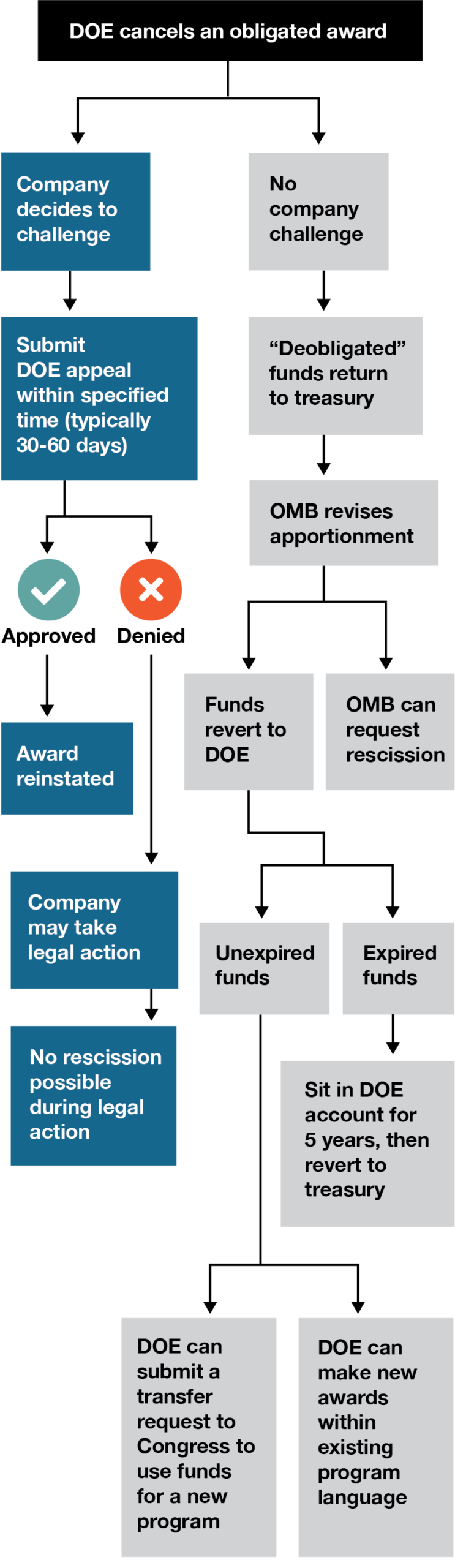
Source: EFI Foundation
Federal Data to Drive Innovation
The Energy Innovation Project aggregates federal data into a centralized database designed to equip policymakers with credible, decision-useful information.
Partnership Drives Progress
If you have ideas, information, or inspiration, we want to hear from you.
About This Data Set
Transparent data and unbiased analysis of DOE staffing, budgeting, and contracting needs are crucial. EFIF is assembling relevant data from hundreds of federal government reports to provide new insights into what technologies and projects are priorities for innovation and what these priorities mean for national progress.
This data and analysis focuses on DOE’s energy and science innovation programs, examining DOE technology trends by office, technology priorities and cancellations, and insights into future priority areas.

Recent Related Analysis
-
The Federal Role in Catalyzing Geothermal
AuthorsEFI Foundation: Alex Kizer, Michael Downey, Rachel Holzer, Katelyn O’Dell Dean Hamm Institute: Katie Altshuler, Jason AngolanoDMH Policy Advisors: David Hart Scaling a new energy…
-
Where is DOE’s IIJA Funding?
Author: Rachel Holzer Contributors: Alex Kizer, Sarah Frances Smith, Katelyn O’Dell Dean The Infrastructure Investment and Jobs Act (IIJA) is the largest federal investment in…

-
Is DOE Open for Business?
What We’re Tracking The Energy Innovation Project is summarizing recent science and energy innovation activities at the U.S. Department of Energy and what might be…
Explore Progress By Topic
Examine DOE’s impact across implementation, staffing, budgets, and technology—and how it’s shaping U.S. energy innovation.

People
Federal workforce capacity to deliver innovation

Spending
Federal investments in innovation